With all the talk in recent years about the death of newspapers, it’s fitting that the printed page turns out to be a great tool for assisting in decomposition in the garden. No kidding! The National Organics Standards Board approves the use of certain types of paper in the organic garden even though they are considered synthetic materials — and although materials like these are up for periodic review for use in the garden, their benefits are undeniable.
Only non-glossy newspaper or other recycled papers with black (non-glossy, noncolored) ink are currently approved — so weed out all of the glossy ads and inserts to collect the Plain Jane newsprint, and let’s get going!
Newspaper is widely available, and is made from wood which easily breaks down into the soil, releasing valuable carbon along with it. And these days, newspaper inks are almost always environmentally-friendly soy inks, so there is little worry there.
So, now that we know that newspaper is a safe and convenient option for the organic garden, here are some ways to use it.
• Sheet mulching. Use 2-4 layers of approved newspaper over weeds in your garden. Then hold them in place with a 3” – 4” layer of collected leaves, grass clippings, or straw. Leave a few inches bare around the base of each of your plants. In the spring or fall after the newspaper has mostly decomposed, turn it into the soil and start the process over again.
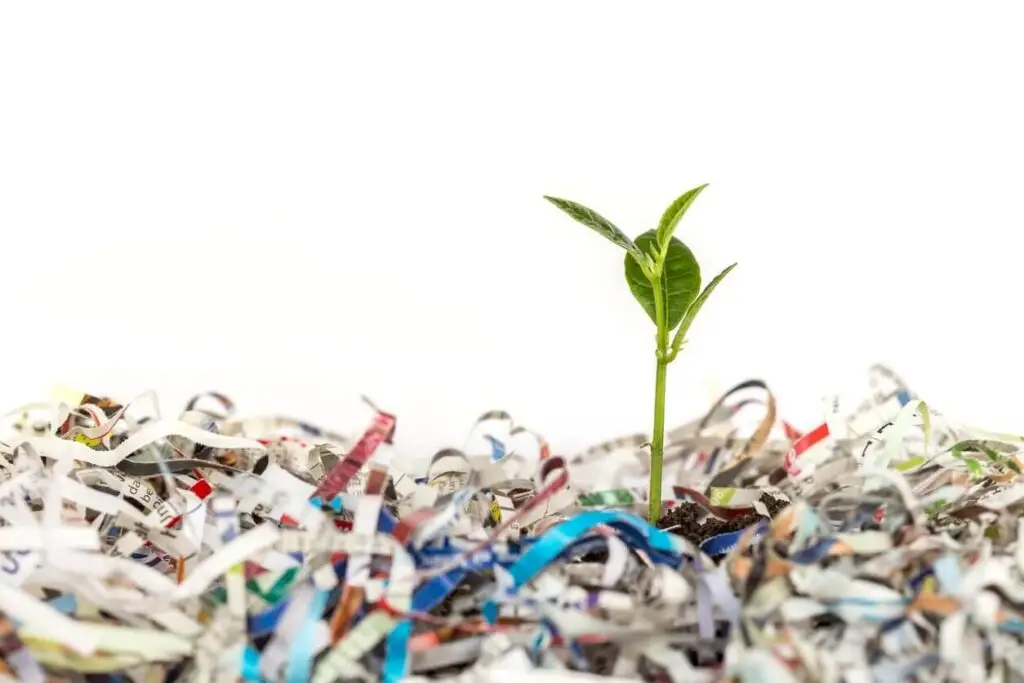
• Composting. Newspaper is a “brown” material that adds carbon to the compost pile, and we all know how beneficial carbon is in the soil. After you’re done solving the New York Times crossword puzzle, shred the paper and add it to your pile, being sure to add similar amounts of “green” material (kitchen scraps, grass clippings, manure) to offset it.
• Lasagne gardening. Lasagne gardening is similar to sheet mulching, but with lots more layers that not only suppress weeds but work to enrich the soil. Gather materials like cardboard, newspaper, compost, leaves, grass clippings, and straw and create layers that, upon breaking down, create a natural compost in the garden. No digging, less work, and with a beautiful result — the only problem is that writing about it makes me hungry.